
Are You Making These Common Fishing Mistakes?
We get it. You love fishing. You're out there on Wyoming's pristine waters, feeling the tug on your line, and nothing else matters. But here's the thing, some of the habits we've picked up over the years might actually be hurting the very fish we're trying to protect.
Whether you're chasing Wyoming cutthroat trout in alpine streams or working your favorite run on the North Platte, small mistakes can have big consequences. The good news? Once you know what to look for, these problems are incredibly easy to fix. Let's talk about three common mistakes that even experienced anglers make, and how to do better.
Mistake #1: The "Hero Shot" Blunder
We've all seen them. Those gorgeous Instagram photos of someone holding a massive trout high in the air, grinning from ear to ear. It's the classic grip-and-grin shot, and yeah, we totally understand wanting to capture the moment.
But here's what most people don't realize: holding a trout out of water is like someone holding you underwater.
Think about it this way. When you've just finished sprinting up a hill and you're gasping for air, how would you feel if someone dunked your head in a bucket of water for 30 seconds? That's essentially what's happening to the fish during those extended photo sessions.
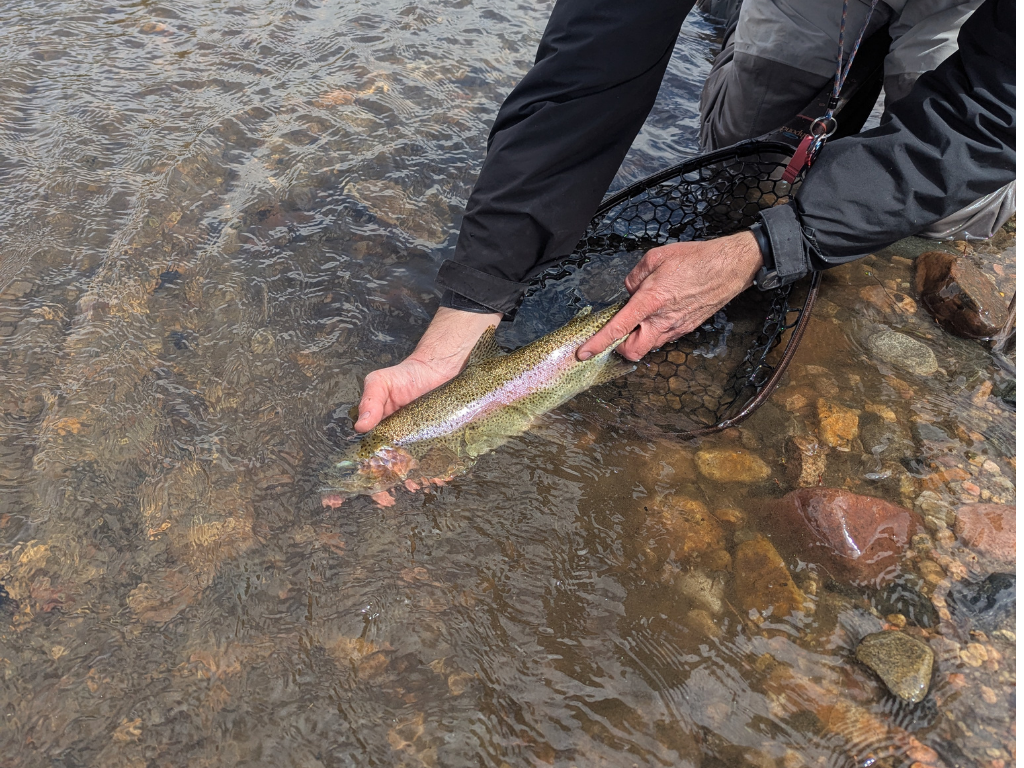
The Science Behind "Keep 'Em Wet"
Fish have a protective slime coating that helps them fight off infections and swim efficiently. When you handle them with dry hands, you're stripping away that coating. Worse yet, every second a fish spends out of water causes stress and potential organ damage. Studies show that after just 30 seconds out of water, a trout's survival rate drops significantly, even if it swims away looking fine.
For trout in Wyoming, where catch-and-release is increasingly the norm, this matters even more. We're often catching the same fish multiple times throughout the season.
The Fix: The 5-Second Rule
Here's your new mantra: Keep 'em wet, hands wet, five seconds or less.
Before you even touch the fish, wet your hands. If you're using a net, make sure it's rubber and keep it in the water. Want that photo? Great! Have your buddy get the camera ready before you lift the fish. Get low, keep the fish close to the water (or better yet, partially in it), snap the shot, and release.
Count it out loud if you need to: "One Mississippi, two Mississippi..." You'd be amazed how long five seconds actually feels. If you need a better angle or the photo didn't turn out, let the fish recover in the water for a minute before trying again.
The Wyoming trout you release today could be someone else's catch of a lifetime tomorrow, but only if we handle them right.
Mistake #2: Walking on the Redds
Picture this: It's October, you're wading upstream on a beautiful Wyoming creek, focused on that rising fish 20 yards ahead. You take another step and, crunch. You just crushed thousands of unhatched trout eggs beneath your boot.
Yeah, it's that serious.
What Are Redds, Anyway?
Redds are spawning beds where trout lay their eggs. In the fall (for most species) and spring (for some Wyoming cutthroat trout populations), fish create these nests by clearing away silt and debris with their tails, exposing clean gravel. The female then deposits eggs, the male fertilizes them, and they get covered with a thin layer of gravel.
Here's the problem: redds are surprisingly hard to spot if you don't know what you're looking for.
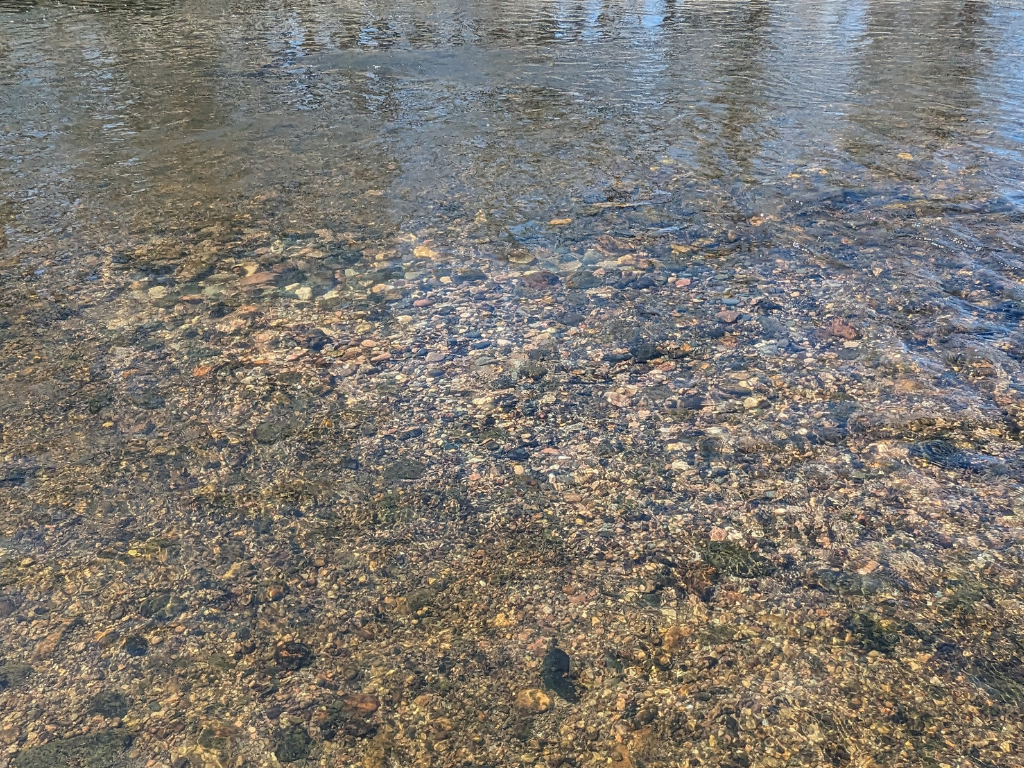
How to Spot a Redd
Look for oval or circular patches of lighter, cleaner gravel in the streambed: usually about 1-3 feet in diameter. They often look like someone took a broom and swept a spot clean. The gravel will appear brighter or more defined than the surrounding streambed because it's been freshly disturbed.
You'll typically find them in areas with moderate current: not too fast, not too slow: and at water depths between 6 inches and 3 feet. Common locations include the tailouts of pools or along the edges of riffles.
During spawning season, you might also see the fish themselves. Cutthroat and brown trout often spawn in pairs, with visible activity and aggressive territorial behavior.
Why This Matters
When you step on a redd, you compact the gravel, crushing eggs and cutting off the oxygen flow that developing embryos need to survive. One careless footstep can destroy an entire year-class of fish from that spawning area.
Given that many Wyoming trout populations face challenges from drought, warming waters, and habitat loss, every successful spawn counts. Literally every single egg matters.
The Fix: Give Them Space
During spawning season (generally September through November for browns and brook trout, March through June for cutthroats), be extra vigilant.
If you see clean gravel patches, walk around them. Give them a wide berth: at least several feet. If a section of stream has multiple redds, consider fishing somewhere else entirely. There are plenty of great waters in Wyoming, and giving spawning fish some peace for a few weeks won't kill you.
And here's a bonus tip: if you hook a fish on a redd, don't play it over the spawning bed. Move to the side and lead the fish away before netting or landing it.
Mistake #3: Fishing When It's Too Hot
Wyoming doesn't impose "Hoot Owl" restrictions like some other states (these are regulations that close fishing during the hottest parts of summer days). That doesn't mean we get a free pass to fish whenever we want, though. It just means the responsibility falls on us.
The 68°F Danger Zone
Here's what happens when water temperatures climb: trout are cold-water fish, and as the water warms up, it holds less dissolved oxygen. When temperatures hit 68°F or higher, trout go into survival mode. They're already stressed before you even cast to them.
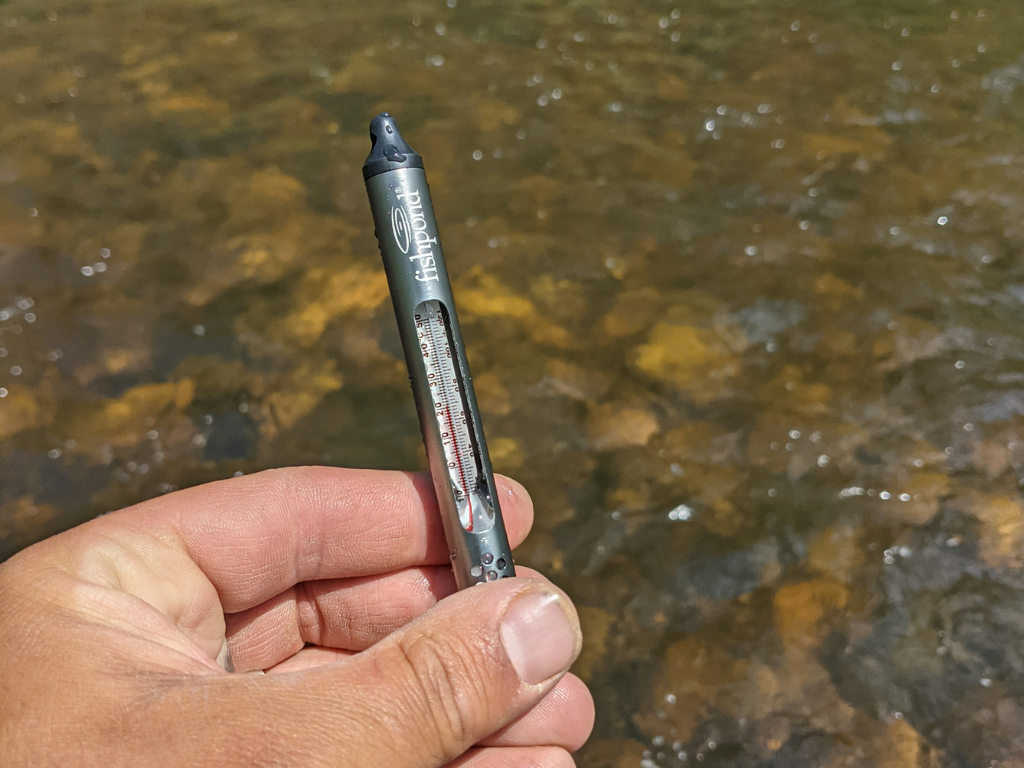
Catching and releasing a fish in warm water: even if you do everything else right: can be fatal. The exertion from fighting on your line, combined with the low oxygen levels, can lead to mortality hours or even days after release. The fish might swim away looking fine, but the internal damage is already done.
Why Wyoming Doesn't Have Hoot Owl Rules (And Why That's Actually Our Responsibility)
Some states impose fishing closures when water temperatures exceed certain thresholds, typically during afternoon hours in July and August. Wyoming takes a different approach, trusting anglers to self-regulate.
That means we need to step up.
The Fix: Carry a Thermometer and Know When to Call It
This one's easy, folks. Buy a stream thermometer: they cost about ten bucks. Take a reading before you start fishing. If it's approaching or exceeding 68°F, make the ethical choice to pack it in for the day.
Or better yet, plan your summer fishing around cooler water temps. Fish early morning or late evening when temperatures are lower. Target high-elevation streams or spring creeks that stay cooler. Some of the best summer trout fishing in Wyoming happens at dawn when most people are still sleeping.
And here's the thing: when you do this, you're not just protecting individual fish. You're protecting entire populations. You're ensuring that your favorite stretch of river stays healthy. You're being the kind of angler that Wyoming's waters deserve.
4. Using the Wrong Hardware
This one’s a little like showing up to a black-tie event in flip-flops: you can, but things are probably going to get messy.
If you’re planning to release fish (and in a lot of Wyoming, that’s the whole point), your hook choice matters more than most folks realize. In general, single hooks and barbless hooks are easier on fish than big trebles and heavy barbs.
Why Single Hooks Help
Treble hooks are great at grabbing… everything. Fish, nets, your sleeve, your thumb, your dog’s ear (ask me how I know). The problem is they also tend to stick fish in multiple places, which means more damage and more time spent doing underwater surgery.
Single hooks usually mean:
Fewer punctures
Less tissue damage
Quicker, cleaner unhooking
Why Barbless Is (Usually) Better
Barbs do exactly what they’re designed to do: make hooks harder to remove. That’s awesome for landing fish, but not awesome when you’re trying to get a trout back in the water fast.
Going barbless (or pinching your barb) typically means:
Faster release (less time handling the fish)
Less injury around the mouth and gills
Less fumbling while the fish is doing the ol’ “please don’t drop me” wiggle
Or, as Keep Fish Wet puts it: “The best way to release a fish is to minimize handling and air exposure.” (https://www.keepfishwet.org/)
The Fix: Simple Swaps, Same Fun
You don’t have to overhaul your whole fly box overnight. Just start with the easy wins:
Swap trebles for singles on lures where it makes sense
Pinch your barbs with hemostats/pliers (takes two seconds)
If you’re worried about losing fish, tighten up your technique instead of your barb
You’ll still catch plenty of trout. You’ll just spend less time wrestling hooks and more time doing what you came for: fishing.
The Bottom Line
None of these mistakes come from a bad place. We all love fishing, and we all want to protect these incredible Wyoming trout for future generations. But good intentions aren't enough: we need good practices.
Keep your hero shots quick and wet. Watch where you step during spawning season. Keep an eye on temps when it gets hot. And set yourself (and the fish) up for success with single, barbless hooks so the release is quick and clean. Your favorite trout will thank you.
Want to get more involved in protecting Wyoming's coldwater fisheries? Check out what we're working on or come to one of our meetings. We're always looking for anglers who give a damn.
Because at the end of the day, we're not just catching fish: we're stewards of something bigger. Let's make sure we're doing it right.